

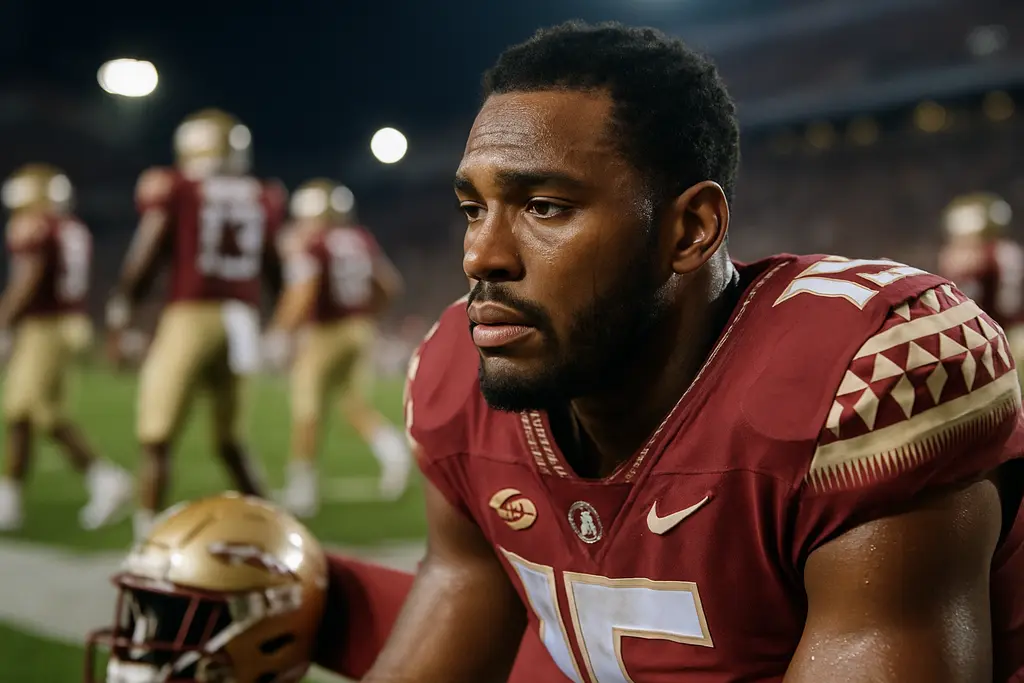
The FSU Football Schedule looks very different on September 24, 2026, than it did when Florida State opened its campaign with hope around a reset. Two losses do not erase a season, but they do change the questions around it. After the 27-24 home defeat to No. 19 SMU on September 7 and the 50-36 road loss at No. 10 Alabama on September 19, Florida State has enough evidence to know where the trouble spots sit: third downs, explosive yardage allowed, pass-game consistency, and defensive control at the line of scrimmage.
How The FSU Football Schedule Shifted After Two Losses
Why The FSU Football Schedule Feels Different Now
The early losses did more than mark the standings. They reshaped the emotional math around every game left. The FSU Football Schedule now asks whether this group can settle itself before the ACC race hardens. On September 7, Florida State lost its conference opener to No. 19 SMU at Doak Campbell Stadium, 27-24, on a 20-yard field goal with 21 seconds left, according to FSU’s official recap. That detail still stings because it was a home game, a league game, and a contest where the Seminoles had chances to take control.
The numbers from that night tell a divided story. Florida State outgained SMU on the ground, 199 rushing yards to 155, yet SMU threw for 430 yards while FSU finished with 125 passing yards. The third-down gap was harsher: SMU converted 8 of 14, while Florida State went 2 of 15. Those are not small margins. They speak to field position, rhythm, and the stress placed on a defense asked to return too quickly.
Ousmane Kromah gave Florida State a real piece to build around. Against SMU, he carried 22 times for 116 yards and a touchdown, and he became the first Seminole to start back-to-back 100-yard rushing games since 2022. Ashton Daniels also supplied a dual-threat element, completing 12 of 23 passes for 125 yards while adding 71 rushing yards on 16 carries. The problem was not effort. It was the lack of sustained answers in the moments that decide close games.
The Alabama Loss Added A Different Warning
The September 19 defeat at No. 10 Alabama carried a different shape. Florida State scored 36 points and produced 471 total yards, including 377 passing yards and 94 rushing yards. Those figures show that the offense found more vertical production than it had against SMU. Yet Alabama finished with 567 total yards, including 247 on the ground, in a 50-36 result that exposed Florida State’s trouble controlling tempo and finishing defensive possessions.
That contrast matters for Tallahassee because the fan base can handle losing a heavyweight road game if the team leaves with proof of growth. The offense did offer some of that. The defense, though, left a heavier concern. A team can survive a rough quarter. It cannot keep giving opponents both time and space and expect the schedule to soften on command.
What The Early Results Say About Identity
Rushing Gives FSU A Starting Point
Through two games, Florida State has shown enough in the run game to avoid panic. Sports Illustrated noted that the Seminoles’ early strengths included forcing turnovers and running the ball, while passing efficiency and defensive stability remained concerns in its national stats review. That matches the feel of the first two games: there are useful traits here, just not enough balance yet.
Kromah’s start has given the offense a tone-setter. Daniels’ running adds another layer, especially when protection or downfield timing breaks down. For a team searching for cleaner third downs, those rushing pieces can be part of the fix. Shorter third downs reduce pressure on the quarterback, keep the playbook wider, and protect a defense that has already faced too many snaps with little margin.
For readers tracking efficiency beyond the box score, our earlier look at advanced stats for Florida State fits the same conversation. The next stage is not about chasing style points. It is about turning strengths into repeatable possessions.
Defense Has To Repair The Middle Of The Game
The defensive issue is not tied to one single category. SMU hurt Florida State through the air. Alabama punished the Seminoles with total yardage and rushing success. Those two losses point to a broader need: fewer free yards, better tackling angles, and more dependable responses after the offense scores. A defense does not need to be perfect to steady a season, but it does need to make opponents earn long fields.
The third-down numbers against SMU remain the sharpest warning. When an opponent converts more than half its third downs and adds explosive passing production, the home crowd spends too much of the game waiting for the next escape. That is a hard way to live, especially with Louisville, Miami, Clemson, NC State, and Florida still sitting on the calendar.
- Third downs: Florida State’s 2-of-15 showing against SMU must become an outlier, not a trend.
- Coverage discipline: The 430 passing yards allowed to SMU show the cost of space and missed leverage.
- Run fits: Alabama’s 247 rushing yards put pressure on the front seven to respond with better gap control.
- Game flow: A stronger defense helps the offense stay patient instead of chasing every drive.
The Schedule Run That Can Steady The Room

Central Arkansas And Virginia Carry Local Weight
For Tallahassee, the FSU Football Schedule now turns toward repair work. Central Arkansas comes to Doak Campbell Stadium on Saturday, September 26, 2026. Then Virginia visits on October 3 for an ACC home game. Those two dates carry different stakes, but both matter because they give Florida State a chance to play in front of its own community after a bruising start.
The Central Arkansas game is not just a reset button. It is a test of discipline. Does Florida State start clean? Does the offense convert early? Does the defense get off the field without gifting extra snaps? After two losses, the way a team handles a game it is expected to control can say plenty about coaching, attention, and locker-room maturity.
Virginia then brings the conference pressure back into focus. If Florida State wants to regain traction in the ACC, it cannot treat league home games as toss-ups. A win there would not solve every issue, but it would help steady the room before a difficult road stretch.
Louisville And Miami Will Reveal The ACC Ceiling
The back-to-back road games at Louisville on October 9 and Miami on October 17 may tell the larger story of this middle stretch. Road games compress mistakes. Crowd noise tests communication. Travel interrupts routine. Rivalry energy in Miami brings its own charge, especially for players from Florida who understand what that game means beyond the standings.
If Florida State enters those trips with cleaner third-down work and a more settled defense, the conversation changes. If the same issues follow the Seminoles away from Doak Campbell Stadium, the schedule becomes less forgiving fast. That is where coaching adjustments face their truest exam. The staff has enough film now. The next few games will show whether the lessons have reached the field.
Why FSU Football Schedule Pressure Matters In Tallahassee
Late-Season Home Dates Can Still Shape The Story
The final third of the slate still gives Florida State meaningful stages at home. Clemson visits on October 31. NC State comes to Tallahassee for the Homecoming and Seminole Heritage game on November 21. Florida arrives on Friday, November 27. Those are not ordinary dates on a local sports calendar. They pull families back to town, fill restaurants and hotels, and turn fall weekends into shared civic markers.
This FSU Football Schedule still offers the Seminoles a chance to change how people talk about the season. The Alabama loss did not end the year. The SMU loss did not erase the run game. Yet both results raised fair questions. Can the passing game become dependable enough to win obvious throwing downs? Can the defense tighten coverage and still hold up against the run? Can the staff turn close-game frustration into cleaner late-game execution?
The answer begins with the next snap, but the meaning stretches beyond one Saturday. Florida State football is woven into Tallahassee’s fall rhythm: campus traffic, tailgate setups, marching band echoes, family routines, and the weekly mood of a city that has seen both championship heights and hard resets. After two losses, patience is thinner. The belief is not gone. It just needs evidence.
That is why the next month matters so much. Central Arkansas and Virginia can restore order. Louisville and Miami can define the ACC path. Clemson, NC State, and Florida can still give the season weight if the Seminoles earn their way back into the conversation. The schedule has not become easy. It has become honest.