

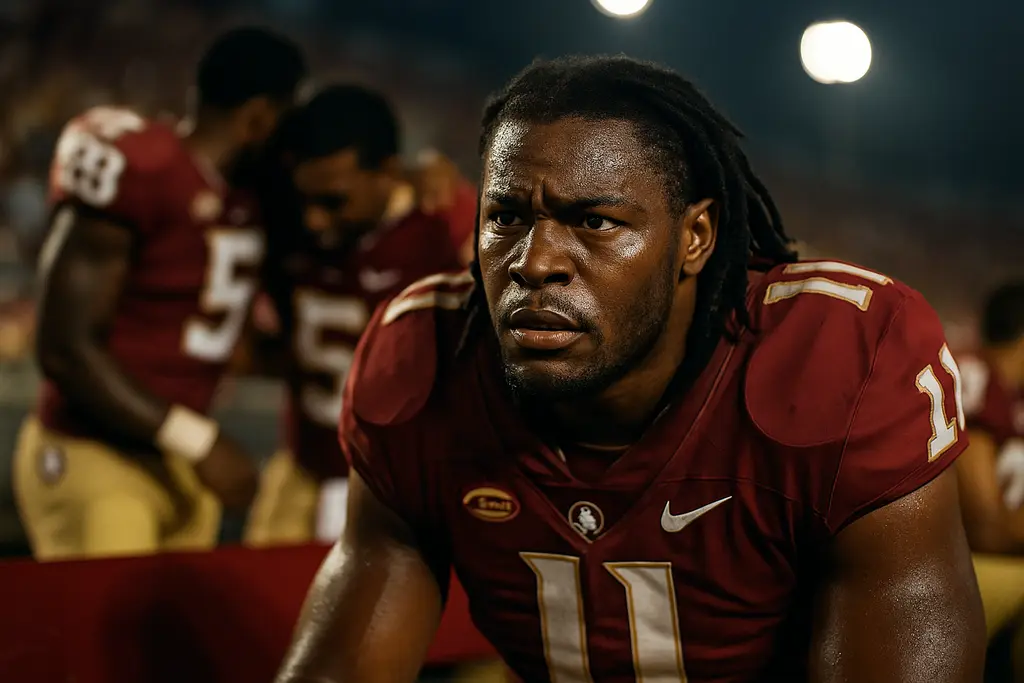
FSU linebacker depth became one of the clearest pressure points on the roster after Florida State’s September injury news changed the shape of the room. For a defense trying to build weekly consistency, the concern is not only who starts. It is how many trustworthy snaps remain behind the starters, who can handle communication in crowded pre-snap moments, and how quickly younger players can move from developmental roles into meaningful football.
The local angle matters because Tallahassee measures these roster shifts in more than box scores. Linebacker depth affects kickoff coverage, substitution patterns, red-zone calls, and how much freedom the defensive front and secondary can play with. When the middle of the defense gets thinner, everyone around it feels the squeeze.
Why FSU linebacker depth Took A Hit
What FSU linebacker depth Lost
On September 14, 2026, Florida State’s linebacker situation changed sharply. True freshmen Izayia Williams and Daylen Green were ruled out for the remainder of the 2026 season, according to Yahoo Sports’ report on the linebacker injuries. In the same stretch of reporting, senior Blake Nichelson was described as being out for an extended period but still expected to return during the season after leaving the opener against New Mexico State with three tackles and missing the SMU game, per Sports Illustrated’s injury update.
Those names matter in different ways. Nichelson’s absence removed an older player from the core rotation, which is often where checks, run fits, and sideline-to-field communication live. Williams and Green were not carrying the same senior-level responsibility, but losing freshmen for the season changes the week-to-week math. It takes away practice competition, special-teams availability, and chances to build game experience before the colder part of the schedule.
Why The Timing Pressed The Room
The timing was the hard part. Florida State had already played New Mexico State on August 29, 2026, and SMU before the September 14 update. That means the staff did not spend the full first month with a settled linebacker rotation. A room can absorb one absence if the hierarchy is clean. Multiple injuries force the coaches to ask a different question: who can do a smaller job well right now, even if the full defensive package is not ready for that player?
That is where FSU linebacker depth moved from a camp discussion to a game-management issue. A reserve linebacker who might have been ticketed for special teams suddenly becomes part of second-half defensive planning. A player who was expected to learn behind a veteran may need to handle a limited package. The staff’s task is to keep the assignments clear without shrinking the defense so much that opponents can identify every adjustment.
How The Rotation Can Absorb The Losses
Veterans Carry The Communication Load
Chris Jones, Omar Graham Jr., Mikai Gbayor, and Caleb LaValle became even more important after the injuries. Jones had 24 tackles over four games through October 1, 2026, with 2.5 tackles for loss, according to the research notes, which points to how quickly his role became central. Graham and Gbayor also sat among the main names in the room through the first two games, while LaValle’s availability carried added weight because the margin behind the top group narrowed.
Communication is the part that does not always show up on the stat sheet. Florida State’s linebackers have to fit the run, carry routes, trigger on screens, and clean up missed leverage. When a starter is missing, the next player does not only replace tackles. He replaces calls, eye discipline, and the trust that lets a defensive tackle attack a gap or a safety rotate aggressively.
Young Reserves Need Defined Jobs
The younger reserves, including Karon Maycock and Noah LaValle, were part of the depth picture mentioned in the research notes. Their path does not need to be complicated to be valuable. A young linebacker can help by taking a coverage lane on special teams, spelling a starter for a short series, or playing a narrow package near the goal line. That may sound modest, but those snaps are where a thin room survives.
For readers tracking how roles across the roster changed after the opener, the linebacker room fits naturally with the broader FSU position battles that shaped early-season evaluations. The difference now is urgency. Development is no longer only about future seasons. It is tied to how Florida State gets through the next stretch without overloading the same few bodies.
Game Analysis: Where Stress Shows Up
Run Fits And Edge Support
The first area to watch is run-fit discipline. A linebacker shortage can tempt a defense to lean on safeties as extra box help, but that choice has a cost. It can expose space behind the second level or limit disguise before the snap. If Florida State’s linebackers fit cleanly, the defense can keep more flexibility on the back end. If they are late, the secondary has to tackle too much in traffic.
That is why FSU linebacker depth is not just a roster-count topic. It changes how Tony White can call a game and how Ernie Sims can rotate players without creating a target. A defense with confident second-level play can pressure from different places. A defense worried about missed fits may have to call safer early downs and hope to win third down with effort and leverage.
Third Down And Special Teams
Third down is another pressure point. Linebackers are often asked to pass off crossers, match backs, spy mobile quarterbacks, and close throwing windows between the hashes. Those jobs demand quick recognition. If younger players are being used, the staff may need to give them cleaner rules: carry this route, wall off this area, or pressure through this gap. Simple does not mean passive. It means the player can play fast.
Special teams should not be overlooked. Season-ending injuries to young linebackers can strip away the bodies that usually cover kicks, protect on returns, or fill emergency snaps. That can ripple into other position groups. A safety or tight end may pick up more coverage work. A starter may be asked to stay on a unit longer than planned. Those are small shifts, but they pile up over a season.
- Can the veterans stay fresh? Florida State needs its most trusted linebackers available late in games, not just early.
- Can reserves master narrow roles? A clear job can help a younger player contribute without carrying the full call sheet.
- Can special teams avoid leakage? Depth losses often show up first in field position.
- Can the staff keep pressure packages intact? The defense needs enough linebacker comfort to avoid becoming predictable.
Recruiting And Development Stakes In Tallahassee
Why This Matters To The Pipeline
Injuries are painful in the short term, but they also reveal how ready a program’s player development system is. Recruits and their families notice which programs have a path for young players, but they also notice whether those players are taught clearly enough to help before they are finished products. For Florida State, that balance is part of the Tallahassee pitch: compete early, learn fast, and be prepared when the depth chart shifts.
The loss of Williams and Green also slows two freshmen who could have used fall Saturdays as teaching tape. That does not erase their futures, but it changes the calendar. Their 2026 becomes more about recovery, meetings, and mental growth than live defensive reps. For a staff trying to stack classes, that puts more pressure on the next wave of linebackers to arrive with physical readiness and special-teams value.
How The Staff Can Sell A Clear Path
There is a recruiting message inside this moment, but it has to be honest. Florida State can point to opportunity, yet opportunity only matters if the plan is clear. A linebacker room hit by injuries needs players who can learn alignments, tackle in space, and accept special-teams work before the starting role arrives. That is not a glamorous pitch. It is a real one.
For the community around Doak Campbell Stadium, that is part of why position depth feels personal. Local fans watch players grow from names on a signing list into core contributors. Injuries interrupt that rhythm, but they also give lesser-known players a chance to become familiar names by doing dependable work in hard spots.
What FSU linebacker depth Means After September
FSU linebacker depth is no longer a quiet roster note after the September 14 injury update. It is one of the central factors in how Florida State manages defensive identity, practice reps, and special-teams stability through the 2026 season. The Seminoles still had veteran pieces and younger reserves in the room, and the staff publicly showed confidence in that remaining group, according to the research notes. The challenge was turning that confidence into clean snaps.
The season did not hinge on one position alone, but linebacker health changed the weekly margin. Florida State needed Jones, Graham, Gbayor, LaValle, and the reserve group to keep the middle organized while injured players worked toward recovery. If that group handled communication and tackled well, the defense could keep its shape. If not, the strain would spread to the front and secondary. That is the honest read for Tallahassee after a tough September at one of the defense’s most demanding positions.