


FSU soccer resilience was the central story on Friday, September 11, 2026, when Florida State twice came from behind to draw NC State 2-2 in the ACC opener at the Seminole Soccer Complex in Tallahassee, according to the official FSU match recap. A draw at home never carries the clean satisfaction of three points, but this one gave the Seminoles a useful test: concede early, respond before halftime, fall behind again, and still find a second answer against an unbeaten opponent.
For a Florida State program that measures itself against ACC and national standards, the value here was not in style points. It was in how the Seminoles handled pressure after difficult moments. NC State landed the first punch in the 2nd minute, then regained the lead at 57:32. Both times, FSU found a reply. That matters in conference play, where matches often turn on small windows: a loose clearance, a second ball, a sharp transition, or a goalkeeper’s save after legs start to fade.
How FSU soccer resilience Took Shape
The match immediately put Florida State in a position that can distort a team’s rhythm. NC State scored in the 2nd minute when Erica Roberts cut in from the wing and struck from outside the box into the top left corner. That type of start can force a home side into rushed decisions, especially in an ACC opener where the emotional charge is high and every possession feels heavier than it should.
FSU soccer resilience In The First Response
The first answer came in the 23rd minute through junior forward Wrianna Hudson. The goal did more than level the score; it restored shape to the match for the Seminoles. Instead of chasing the game for the rest of the first half, FSU had time to settle into a more balanced contest. Shaneil Buckley assisted on Hudson’s equalizer, which became the first half of a breakout individual night for the junior midfielder.
That first response also carried local meaning. At the Seminole Soccer Complex, early deficits can make the crowd anxious because supporters know how thin ACC margins can be. By tying the match before halftime, Florida State gave the home crowd a reason to stay connected to the match rather than watching tension grow with each missed chance.
Buckley’s Breakthrough Changed The Match
Buckley’s night became the strongest player-development story from the draw. She recorded her first career goal and first assist in NCAA Division I play, with the assist on Hudson’s goal and the tying goal in the 65th minute, per FSU’s official recap. Her equalizer came at 64:29 after a fast transition sequence involving Ahmad to Erbach before Buckley won the ball near the left corner of the box, dribbled inside, and hit a shot that deflected off the crossbar and in toward the far post.
That sequence is worth slowing down because it showed more than a single finish. It showed recognition in transition, a willingness to attack space, and enough composure to take on the moment after NC State had retaken the lead less than eight minutes earlier. For coaches evaluating rotation trust, and for younger players watching from within the program, that is the kind of response that can shape future minutes.
What The Draw Said About ACC Pressure
NC State entered and left the match unbeaten, moving to 7-0-2 and 0-0-1 in ACC play after the result. Florida State moved to 4-1-2 and 0-0-1 in the conference. Those records give the draw context without turning it into a standings verdict. This was a first conference data point, not a season definition, but the way it unfolded gave FSU evidence of competitive balance under stress.
Why The Second Equalizer Mattered
The second equalizer was the clearer measure of FSU soccer resilience because it came after NC State had already shown it could recover momentum. The Wolfpack regained the lead at 57:32, which often becomes the hardest part of a match for the trailing team. There is enough time to respond, but not enough time to waste possessions. FSU’s answer in the 65th minute prevented NC State from settling into a long stretch of control while protecting a lead.
That matters for Florida State’s coaching staff because response goals are often built from habits more than speeches. Players have to keep passing lanes alive, make transition runs, and avoid turning urgency into panic. Buckley’s goal was the finishing moment, but the build-up through Ahmad and Erbach showed how quickly FSU could turn a regain into danger.
Ockene’s Late Save Preserved The Point
The final stage of the match belonged more to survival than celebration. NC State fired the final three shots, and goalkeeper Kate Ockene made a key save in the 76th minute to preserve the tie. That save should not be buried beneath the two equalizers. Draws often hinge on a late attacking moment, but they survive because a goalkeeper handles the one shot that could undo the comeback.
For a team trying to build a conference profile, that detail matters. Florida State had already spent energy chasing the match twice. If the Seminoles had conceded again after equalizing through Buckley, the night would have read very differently. Instead, Ockene’s save helped make sure the response work held up through the closing pressure.
Player Development Signals From Tallahassee
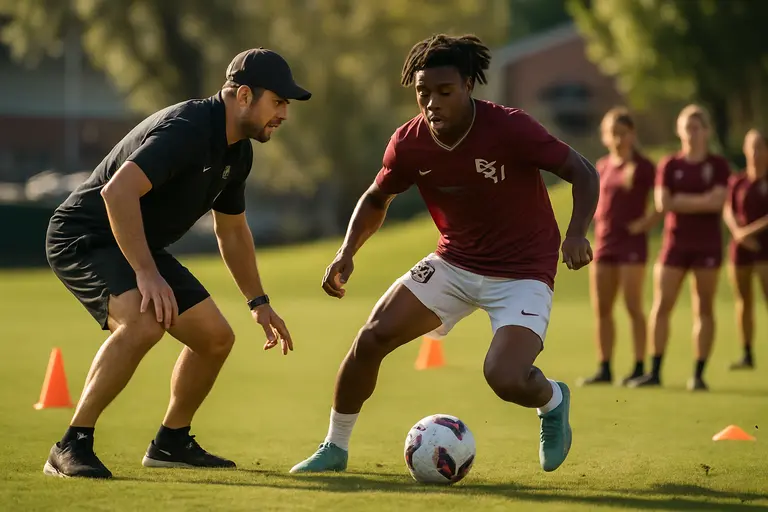
The most useful takeaway from the match may be how many roles were attached to the result. Hudson supplied the first equalizer. Buckley created one goal and scored the other. Ahmad and Erbach were part of the transition sequence that led to the second tie. Ockene protected the draw late. No single player carried the whole night, which is a healthy sign for a team moving through ACC play.
There is a recruiting angle here, too, though it should stay grounded. Prospects and families often study whether a program gives players room to grow into bigger roles. Buckley’s first Division I goal and assist offered a clear example of a player making a match-changing contribution in conference play. That is not a promise about future results, but it is a visible development point.
- Hudson’s finish: FSU needed an early answer, and the junior forward supplied it in the 23rd minute.
- Buckley’s two-way impact: Her assist and goal gave the Seminoles both production and momentum.
- Ockene’s save: The 76th-minute stop protected the draw when NC State pushed late.
This result also fits a broader conversation about how Florida State can sharpen chance creation and late-game control after draws. The program had already given supporters reason to study match management themes, and our earlier look at FSU soccer strategies raised similar questions around shot quality, set pieces, discipline, and depth. The NC State draw offered another case study, this time under ACC pressure.
Why FSU soccer resilience Matters After NC State
The 2-2 draw did not give Florida State a win, but it did offer a fair measure of the team’s competitive nerve. Twice trailing an unbeaten NC State side and twice answering in Tallahassee is not a small detail. The match showed that the Seminoles could absorb an early setback, respond through Hudson, handle a second deficit, and still have Buckley produce the decisive attacking moment for the tie.
The schedule context also matters. After the September 11 match, FSU had a 15-day break before a road match at Louisville scheduled for Sunday, September 27, 2026. That gap gave the staff time to evaluate the defensive start, the transition sequences that produced danger, and the late pressure that required Ockene’s save. For a community that follows this team closely, the draw left a practical message: FSU soccer resilience was real against NC State, but turning that response into cleaner control is the next step.