

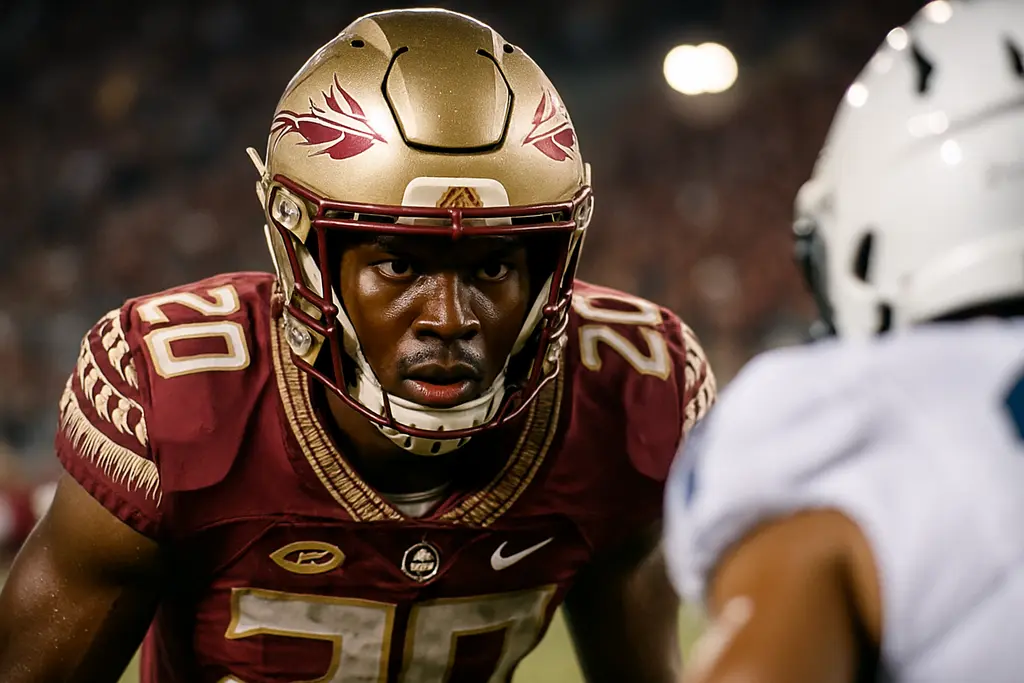
Good defensive strategy rarely starts with a highlight. It starts with positioning, patience, communication, and the willingness to win possessions that do not show up in the most replayed clip. For Florida State fans, that idea travels across sports: a stop on third down, a forced miss at the rim, a fullback cut off before a cross, or a rebound secured when everyone in the building knows the ball is coming off hard.
The recent research across basketball and international soccer offers a useful frame for game analysis in Tallahassee. The Oklahoma City Thunder led the NBA in 2025-26 with a 107.7 defensive rating, the league’s best mark by that metric, according to StatMuse defensive ratings. On July 14, 2026, Spain defeated France 2-0 in a World Cup semifinal that the Associated Press described around Spain’s ability to shut down France and Kylian Mbappé AP match report. Those examples come from different sports, but they speak the same language: reduce clean looks, deny rhythm, and finish the play.
Florida State supporters know that defensive pride is not just a scheme board. It becomes a mood around a team. It affects how a crowd responds to a third-and-short, how a bench reacts to a deflection, and how young players learn that effort without structure can still leave gaps. The best defenses are not only aggressive. They are connected.
Defensive Strategy Starts With Shot Quality
Defensive Strategy In Basketball Terms
Basketball gives us one of the cleanest ways to talk about defensive strategy because every possession creates a small test: did the defense allow the shot it wanted to prevent, or did it push the offense toward something less dangerous? Oklahoma City’s 2025-26 profile, as provided in the research, points to that kind of control. The Thunder did not merely defend by hoping opponents missed. They paired pressure with shot contesting, and the research notes that they held opponents to a league-low field goal percentage of 43.7 percent.
That number matters because it shifts the conversation away from style points. A defense can look active and still be late. It can force a tough pass and still fail to block out. It can switch, trap, rotate, or sit in a compact shell, but the final question remains the same: did it reduce the quality of the opponent’s chance?
What Tallahassee Can Borrow
For Florida State basketball, football, soccer, softball, and every sport where space must be defended, the lesson is not to copy an NBA system. The lesson is to value repeatable habits. Closeouts need discipline. Help defenders need timing. Back-side players need to see both the ball and the threat. When one player gambles without cover behind him, the whole group pays for it.
That is why fans should watch the possessions after the first stop. The research also flags second-chance points and rebounding as common improvement areas even for strong defenses. That is the part of defense that often separates a good sequence from a winning sequence. A contested miss does not finish the job if the opponent gets the ball back six feet from the basket. In football terms, that is like forcing a quarterback off his first read, then missing the tackle in space. In soccer terms, it is like blocking the first shot, then losing the runner on the rebound.
Spain Showed Shape Before Panic
How Spain Controlled France
Spain’s 2-0 win over France on July 14, 2026, offered another lesson that translates well to Florida State game analysis: star power can be contained when the group defends with shape. The research notes that France had no shots on target before the 80th minute. It also notes that Spain’s back line, including Pau Cubarsí and Marc Cucurella, combined aerial work, discipline, and low-error defending.
That sort of performance does not happen by accident. It requires defenders to trust the players next to them. One player presses, another covers. One defender steps toward the ball, another protects the space behind. The midfield does not get pulled apart chasing every touch. The back line refuses to make the single mistake that gives a fast forward a clean lane.
Why One Star Cannot Break A Set Unit
The research says Mbappé attempted three shots, none on target, and completed one of six dribble attempts. Without adding anything beyond the research, that tells us Spain made his best actions harder. It did not mean France lacked talent. It meant Spain forced France’s most dangerous attacker into less comfortable moments.
This is where defensive strategy becomes cultural. Great defensive teams do not treat a star opponent as one player’s assignment. They treat him as a collective problem. That applies on a football field when a defense brackets a receiver, in basketball when help is loaded to the strong side, and in soccer when defenders deny the inside lane and force the ball wide. The public may remember the name of the defender closest to the play, but the stop often belongs to three or four players who made the right choices before the camera caught up.
Areas That Still Need Work

Rebounds, Second Chances, And The Football Parallel
The clearest improvement point across the research is finishing defensive possessions. In basketball, that means securing the rebound after forcing the miss. In football, it means turning pressure into a tackle, not just a hurried throw that becomes a scramble. In soccer, it means clearing the second ball, not simply blocking the first attempt.
That is the part of defense that can frustrate a fan base because the hard work is already visible. The crowd sees the initial pressure. The bench rises when the shot is contested. The sideline reacts when the quarterback is flushed. Then a missed rebound, missed tackle, or loose clearance resets the opponent’s possession. Those are the moments coaches replay because they reveal whether a team is satisfied with disruption or committed to completion.
The Community View From Tallahassee
In Tallahassee, defense has a way of becoming communal. A loud home crowd can reward effort, but it can also sense disorder. Fans recognize when rotations are late. They recognize when a defense is surviving instead of dictating. They recognize when young players are thinking instead of reacting.
That matters for player development. A freshman or first-year starter may have the physical tools, but defense often asks for trust before comfort arrives. The player has to learn scouting cues, spacing, footwork, and communication while moving at game speed. Coaches can teach the plan, but teammates help enforce it. Veteran voices on the floor or field can prevent one mistake from becoming a run.
For Florida State fans, this is where patience and standards can coexist. Not every defensive lapse signals a broken plan. Some show the normal growing pains of players learning timing together. Still, the standard should stay clear: contest the first action, recover to the next one, and end the possession with the ball secured or cleared.
- Limit clean chances: Strong defenses reduce dangerous looks, not just total attempts.
- Finish the possession: Rebounds, tackles, and clearances turn pressure into results.
- Defend as five, eleven, or the full unit: One standout helps, but connected spacing wins more often.
- Stay disciplined against stars: Elite players punish panic, late help, and poor angles.
Defensive Strategy Lessons For Florida State
What The Best Examples Teach
The broader lesson for Florida State athletics is that defensive strategy should be judged by the quality of chances allowed and by how often a team completes the stop. Oklahoma City’s season profile points to the value of forcing difficult shots over a long sample. Spain’s semifinal win showed how structure can drain comfort from a world-class attack in a single high-pressure match.
The same thinking belongs in Tallahassee film rooms and fan conversations. A defensive possession is not one event. It is a chain. Ball pressure affects passing lanes. Passing lanes affect timing. Timing affects shot quality. Shot quality affects rebounding angles. Rebounding angles decide whether the defense actually gets to run the other way.
That chain is why defensive improvement can feel slow before it becomes obvious. The first signs may not be dramatic. Maybe opponents need one extra pass. Maybe a star scorer catches the ball two steps farther from goal. Maybe a third-down throw is contested instead of comfortable. Maybe a weak-side rebounder arrives on time twice in a half. Those small gains build trust, and trust builds the kind of defense a community can feel.
For a Florida State audience, the takeaway is sports-first and local: defense is not only about stopping someone else. It is about giving your own team identity, stamina, and belief. The programs that treat defense as shared work tend to give their fans something sturdy to hold onto when offense runs cold. That is the standard worth discussing after every film session, every practice report, and every game in Tallahassee.