

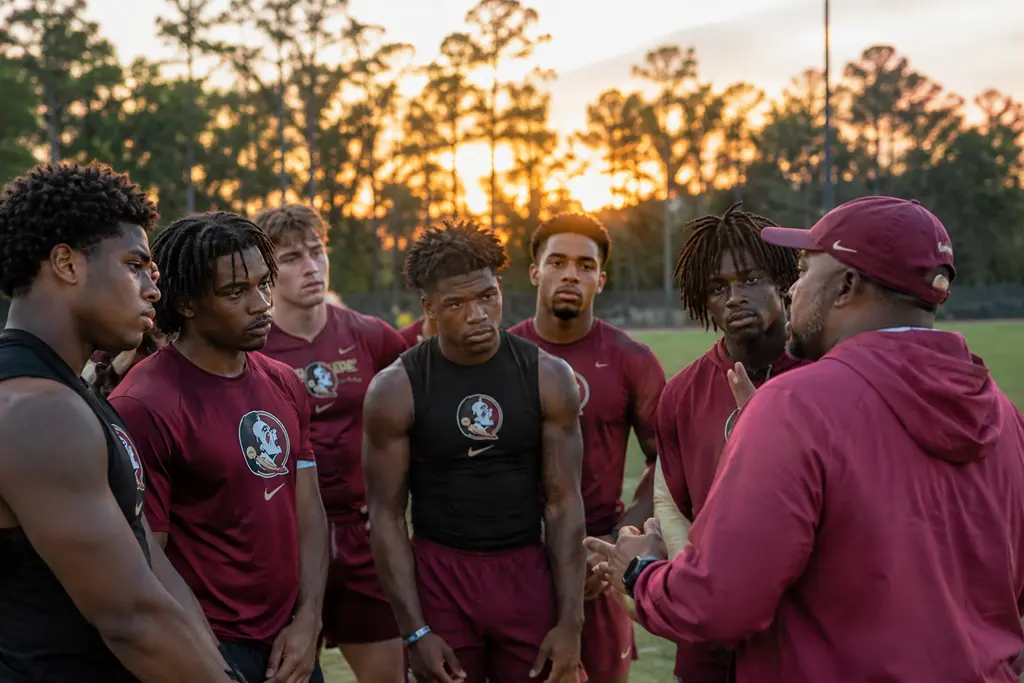
The FSU 2027 class entered November carrying more than the usual recruiting tension. Florida State fired Mike Norvell on November 1, 2026, named Rick Stockstill interim head coach, and began a national search for a full-time replacement. That sequence turned a developmental recruiting cycle into a test of trust: trust from committed prospects, trust from high school coaches, and trust from families trying to picture what the program will look like by signing day.
For Tallahassee, this is not just a rankings story. It is a local sports identity story. Florida State’s best classes have usually carried a clear message about who the Seminoles want to be on Saturdays: fast on defense, dangerous on the perimeter, and connected enough in Florida to keep top regional prospects listening. A coaching change interrupts that pitch. The new staff will inherit a class with real pieces, but also one that needs daily attention before the early signing period on December 2–4, 2026.
Why the FSU 2027 class Is So Exposed
Ranking Pressure After A Decommitment
Florida State’s class was already under pressure before the staff change became official. On3 placed the Seminoles at No. 30 nationally and sixth in the ACC in its 2027 class breakdown, a standing that reflected a solid base but not the kind of national top-tier momentum FSU expects to carry into late-cycle recruiting On3 class breakdown. After Connor Winn’s decommitment, Yahoo Sports reported that Florida State dropped to No. 43 nationally in the 247Sports team rankings with 15 commitments remaining Yahoo Sports ranking report.
That gap between No. 30 and No. 43 matters because it shows how fragile a class can become when the total commit count is not stacked with five-star insulation. The research notes listed 15 total commitments at the time of the change, including seven four-star recruits and no five-stars. A single exit, especially at a position of need or from a prospect with relationships inside the class, can move both the ranking and the mood. Recruiting rankings are not the only measure of a class, but they often reflect whether a staff is winning enough head-to-head battles to keep momentum alive.
FSU 2027 class Pressure Points
The first pressure point is staff retention. Recruits commit to a school, but they often commit through a position coach, a coordinator, or a head coach who has spent months building family trust. If the next head coach keeps parts of the current recruiting operation, the transition may feel less jarring. If the change reaches position rooms, the class could see more prospects reassess the pledge they made under the previous structure.
For the FSU 2027 class, scheme clarity is the second pressure point. Defensive prospects want to know whether their role changes. Offensive skill players want to know the tempo, quarterback plan, and play-calling identity. Linemen want to know who will coach them every day. Those questions are normal in any transition, but the calendar makes them sharper. The early signing period on December 2–4, 2026 leaves only weeks for the interim staff and search process to steady the message.
Commitment Retention Starts With Staff Clarity
What Rick Stockstill Can Control Now
Rick Stockstill’s interim title does not give him the same recruiting pitch as a long-term head coach, but it does give Florida State a point person. His immediate task is not to promise what he cannot know. It is to keep communication consistent, confirm that committed players remain valued, and prevent silence from becoming the story. In recruiting, silence gets filled by rival staffs, family concerns, and social media speculation.
The strongest short-term move is simple: make every committed player feel accounted for. That means clear contact windows, honest updates about the search, and a direct explanation of where each prospect fits if the next staff honors the current board. The Seminoles do not need to solve every question by mid-November. They do need to avoid giving recruits the feeling that the class is drifting.
Why Florida Relationships Matter More Now
The local piece is central. The research notes point to concern about the lack of marquee in-state Florida recruits under Norvell. A coaching change can make that trend worse if high school coaches feel disconnected from the transition. It can also create a reset if the new hire brings trusted recruiters with Florida ties and prioritizes face-to-face relationship repair in the state.
That point connects to a wider Tallahassee issue covered in our FSU leadership change analysis: administrative and football decisions are felt beyond the Moore Athletic Center. They reach booster rooms, Friday night sidelines, and families who want to know whether Florida State is stable enough to develop their sons. The next coach will not be judged only by press conference polish. He will be judged by whether high school coaches in Florida see a staff that shows up, listens, and follows through.
Where the Class Can Still Be Protected

Defense-Heavy Identity Could Help
The class profile gives Florida State something to work with. The research notes describe the group as leaning toward defense, though the position count in the notes does not perfectly align with the 15-commit total reported after the Connor Winn move. The safe read is that defensive commitments make up the largest share of the group. That matters because a defense-first identity can survive a transition if the next hire and defensive staff give prospects a clear player-development plan.
The Seminoles have long needed defensive speed and edge depth to compete at the standard expected in Tallahassee. If the new staff can retain defensive commitments, it protects the spine of the class. Losing one or two skill players hurts, but losing multiple front-seven pledges could create a deeper roster issue down the line. The defensive board should be treated as a retention priority, especially with prospects who want clarity on position coaching and scheme fit.
Three Dates And Decisions To Watch
The FSU 2027 class cannot be judged as fixed on November 6, 2026. The next two months will shape whether this becomes a held-together transition class or a group that needs a late rebuild.
- Full-time head coach decision: The faster Florida State provides a credible long-term voice, the easier it becomes to answer recruit and family questions.
- Early signing period, December 2–4, 2026: This window will reveal which commitments are comfortable signing through uncertainty and which prospects need more time.
- Transfer portal opening, January 4, 2027: Portal needs may influence how aggressively the new staff pushes for high school additions at certain positions.
None of those points require panic. They do require precision. If Florida State hires a coach with proven recruiting relationships, keeps key assistants long enough to bridge communication, and presents a clear NIL and development plan, the class can stabilize. If the search stretches without clarity, rival programs will keep pushing the idea that the safest path is elsewhere.
What the FSU 2027 class Means for Tallahassee Trust
For the FSU 2027 class, the forecast is cautious rather than fatal. Florida State still has commitments to protect, a brand that matters in living rooms, and a community that understands how quickly energy can return when the football operation feels aligned. The concern is timing. November coaching changes do not give recruits much room to wait, and the December signing window will arrive before every staff question can be answered.
The best recruiting pitch now is not a slogan. It is proof of order. Florida State has to show committed players that they are not leftovers from a prior regime, show Florida high school coaches that local relationships will be valued, and show families that development plans will survive the change. If that happens, the Seminoles can keep enough of the class intact to give the next head coach a workable foundation. If it does not, the ranking drop after Connor Winn may be remembered as the first sign of a larger reset.