


Miami Fan Engagement offers a useful case study for any Florida State fan zone plan tied to a match against Miami, but the planning has to start with one honest point: no confirmed date, venue, kickoff time, or sport-specific event details were supplied in the research. That means the safest approach is not to pretend a full schedule exists. The better approach is to study what Miami organizations have already done, then shape those ideas around Florida State’s own fan base, travel patterns, families, students, alumni, and local game-day habits.
The best fan zones are not just holding areas outside a gate. They set the emotional tone before the match, help families manage time, give students a place to gather, and let older fans enjoy the day without feeling rushed. Against Miami, that matters even more because the opponent already carries a built-in edge for conversation. A smart fan zone turns that edge into community energy rather than noise for noise’s sake.
What Miami Fan Engagement Shows Fan Zones Can Do
Miami Fan Engagement Starts Before Kickoff
Inter Miami’s model gives planners a clear starting point. The club says its Fan Zone presented by Baptist Health opens three hours before kickoff for home matches and includes a 360-photo booth, fútbol ring, goalie reaction wall, lounge area, DJ booth, and family-friendly games such as Jenga, Corn Hole, and Connect 4, according to the official Fan Zone FAQ. The lesson for Florida State is not to copy each station exactly. The lesson is that three hours gives fans enough time to arrive, settle in, participate, eat, take photos, and still enter the venue without feeling like the day is working against them.
For Florida State, Miami Fan Engagement can be read as a timing lesson as much as an activity list. A photo station creates shareable memories. A reaction wall or skill challenge gives competitive fans something to measure. A lounge area gives grandparents, parents, and younger children a place to reset. A DJ booth keeps the space from feeling like a waiting room. The more varied the zone, the more likely it is to serve the whole crowd instead of only the loudest group.
Access Matters As Much As Activity
The same Inter Miami FAQ says fans can enter seating areas 90 minutes before kickoff, the Fan Zone remains open during halftime, and access is supported through Gate 1 plus three new Fan Zone entry points. Those details matter because a fan zone can fail even when the activities are strong. If entry backs up, if families cannot tell where to go, or if fans feel stuck outside too close to kickoff, the experience turns from fun into friction.
Florida State should treat gates, signs, walking routes, and halftime movement as part of the fan experience, not back-office logistics. A match against Miami will draw fans who arrive with different expectations: students looking for atmosphere, local families managing children, alumni returning with traditions, and visiting supporters trying to understand the site. The fan zone has to welcome all of them while still protecting the home-field feel.
Build A Matchday Plan Around Movement
Give Families A Clear First Stop
A strong family plan begins before anyone reaches the turnstile. If families know the first stop includes games, shaded rest, a photo setup, and a clear route to seats, they can make better choices about arrival time. The research from Miami shows that low-barrier activities work because they do not require special skill, long instruction, or a separate purchase. Jenga, Corn Hole, Connect 4, and photo booths are easy to understand. That sounds simple, but simple is often what keeps a parent from leaving the area early.
For a Florida State crowd, the family zone should also respect pace. Not every fan wants a loud prematch scene for three straight hours. Some want a 20-minute stop, a quick photo, and a clean route inside. Others want to stay through the full window. Good planning gives both groups a path. That is where Miami’s example helps: the fan zone is an extension of the matchday, not a separate event competing with the match.
Keep The Energy Alive At Halftime
The most useful part of Miami Fan Engagement may be halftime access. If a fan zone remains open during halftime, it can reduce crowd pressure inside concourses and give families another option besides waiting in lines. This is especially helpful for fans with younger children, people who need a short break from the seating bowl, or groups that want to regroup without leaving the venue atmosphere.
Florida State planners should think of halftime as a second wave, not an afterthought. A reaction wall, small-sided skill challenge, or quick photo station can be built for fast turnover. The goal is not to pull fans away from the match. The goal is to make the break feel organized, useful, and connected to the day.
Use Appreciation Moments Without Turning It Into Noise
Make Keepsakes Feel Connected To The Match
Inter Miami also used its final regular-season home match at Chase Stadium on October 11, 2026, as Fan Appreciation Night presented by Chase. The club promoted prematch activations including a Hat Bar, giant inflatables, Teqball, photo booths, branded giveaways, commemorative pennants for the first 10,000 fans, and rally towels for all attendees, as described in its Fan Appreciation Night details. Since that event already happened, it now works as a recent example rather than a future invitation.
For Florida State, the important idea is selectivity. A giveaway should feel tied to the match, the opponent, or the fan community. A commemorative item can become part of a family’s memory if it marks the occasion clearly. A rally towel can unite a crowd if it is distributed broadly and used at a natural moment. Random items may fill a table, but connected items carry the day beyond the final whistle.
Let Skill Games Create Stories
Skill-based stations such as Teqball, a goalie reaction wall, or accuracy games work because they give fans something to talk about. A student can challenge a roommate. A parent can compete with a child. Alumni can compare attempts and laugh about form. That kind of activity builds a shared story before the teams even take the field.
Against Miami, the competitive theme does not need to be forced. Fans will already feel the edge of the matchup. A fan zone should channel that edge into games, photos, chants, and shared routines that keep the atmosphere positive and centered on the sport.
A Practical Fan Zone Blueprint For Florida State
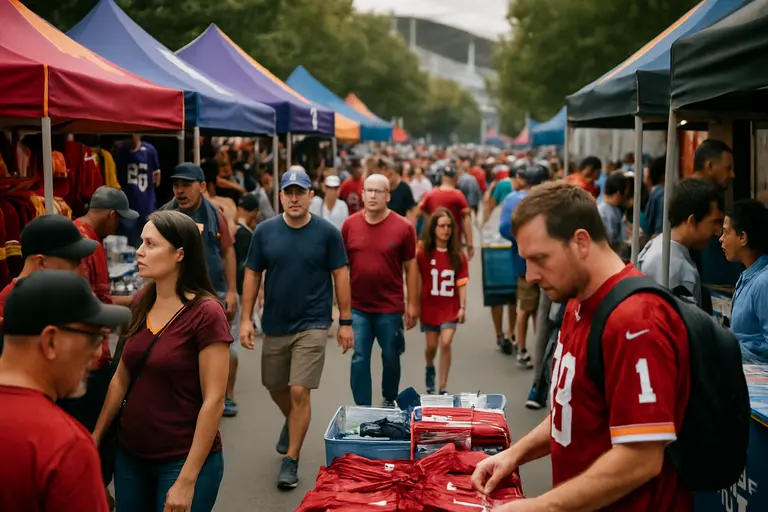
Set The Space Before The Crowd Arrives
A Florida State plan built from the research should begin with time, access, and variety. The three-hour model gives room for early arrivals. Multiple entry points reduce pressure. Halftime access adds value after kickoff. Activity variety keeps the zone from serving only one type of fan.
- Arrival Window: Open early enough for fans to enjoy the area without choosing between activities and seats.
- Family Games: Use simple games that work for children, parents, and mixed-age groups.
- Skill Stations: Add soccer-style or sport-specific challenges that encourage friendly competition.
- Photo Moments: Create clean, fast-moving photo areas that mark the Miami matchup.
- Halftime Option: Keep select stations open so fans can move without losing the matchday feel.
- Clear Entry Routes: Treat signs, gates, and staff communication as part of the fan zone itself.
This blueprint keeps the focus where it belongs: on the fan experience around the match. It avoids turning the day into a sponsor checklist and gives the community reasons to arrive earlier, stay engaged, and share the space across generations.
Miami Fan Engagement For Florida State Fans
Why The Local Feel Should Lead
Miami Fan Engagement works best as a reference point, not a script. Florida State’s fan zone should still feel like Florida State. The music, games, keepsakes, entry flow, and halftime plan should serve the people who show up in garnet and gold, including students, families, alumni, and longtime local supporters.
The match against Miami gives planners a natural spark. The research shows that successful fan zones are early, varied, accessible, and active beyond the opening whistle. If Florida State uses those principles with its own community voice, the fan zone can become more than a prematch stop. It can become part of how fans remember the Miami matchup.