

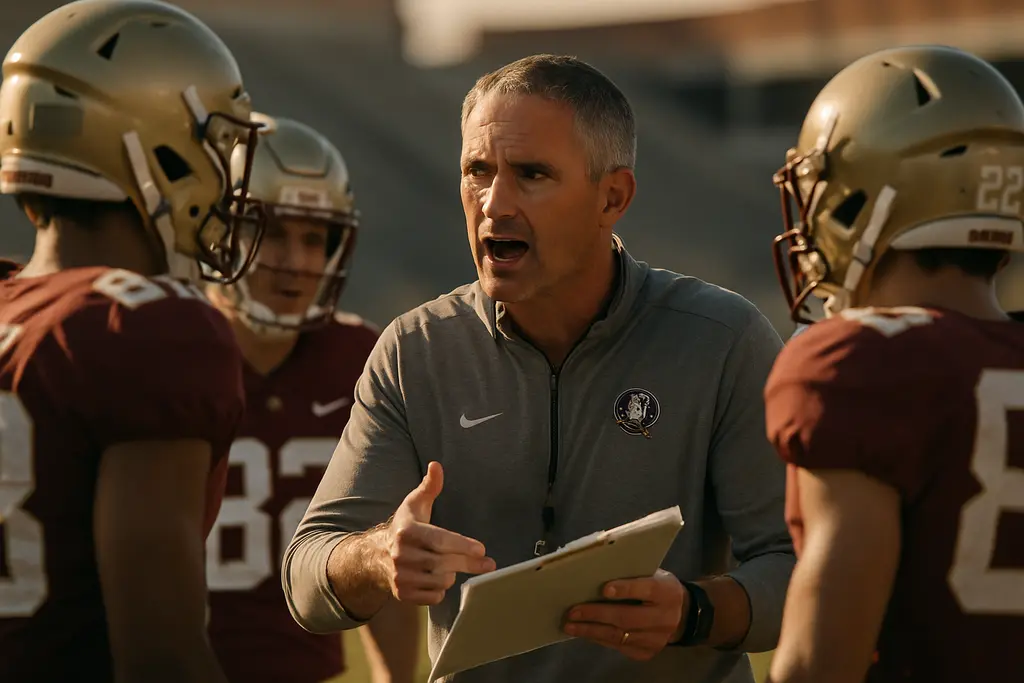
Mike Norvell Development is not just a staff-room phrase at Florida State. It has become the measure of whether the Seminoles can turn hard lessons into better Saturdays, steadier locker-room habits and a team that feels connected to Tallahassee again. After the 2-10 collapse in 2024 and the offensive growth that followed in 2025, Norvell’s program has given fans a clear case study in what coaching repair looks like when it touches personnel, play-calling, leadership and trust.
There is a tendency in college football to judge a coach only by the loudest week. In Tallahassee, that usually means either a packed Doak Campbell Stadium after a big win or a long walk out after a loss that leaves everyone arguing on Gaines Street. But the more revealing story is usually slower. It sits in the offensive line room, the transfer conversations, the way a freshman earns snaps, and the way veterans decide whether to buy into another winter of change.
Mike Norvell Development After The 2024 Break
Why Mike Norvell Development Became The Test
The 2024 season forced Florida State to answer a blunt question: could a program that had fallen to 2-10 change without losing its identity? Norvell responded with significant staff and roster changes. He stopped calling offensive plays himself, brought in an offensive coordinator, rebuilt the offensive line with experienced transfers, and put renewed attention on bond-building, leadership, team chemistry and finishing games, as ESPN reported.
That shift mattered because it moved the conversation from slogans to structure. Giving up play-calling control is not a small thing for an offensive-minded head coach. It changes meeting rhythms, sideline responsibilities and how players hear instruction during the week. For Florida State, it also signaled that the program’s repair work was not limited to changing names on a depth chart. The Seminoles needed better habits, better communication and a cleaner chain of responsibility.
A Reset Built Around Trust
Luke Petitbon became one of the clearest examples of that reset. A five-year Wake Forest center, he transferred before the 2025 season and quickly emerged as a leader on the rebuilt offensive line. According to ESPN, Petitbon cited shared vision, high standards and Norvell’s commitment to full effort as reasons for his decision to join Florida State.
For fans, that kind of detail matters more than a transfer label. A center is not a glamour addition in the way a quarterback or edge rusher can be, but a veteran center changes how a team practices and communicates. He touches the ball on every offensive snap. He sets calls. He steadies younger linemen. When a player with that background becomes a leader quickly, it says something about both the player and the room he entered.
Production Shows The Coaching Shape
Offense With Player Growth
Numbers never tell the whole story, but they can reveal whether a coaching idea has reached the field. Norvell’s head-coaching profile from 2016 through 2026 credits his offenses with averaging 34.6 points per game, third-highest among active head coaches during that period. It also lists 60 individual 100-yard rushing games, 52 individual 100-yard receiving games and 26 individual 300-yard passing performances under his watch, according to his Norvell staff profile.
That history matters because Mike Norvell Development has often been tied to offensive variety. The production has not come from one kind of player or one kind of Saturday. It has included backs, receivers and quarterbacks hitting major benchmarks. In Tallahassee terms, that gives fans a framework for judging whether the program is creating space for different skill sets rather than asking every roster to win the same way.
The 2025 Florida State offense gave that discussion a fresh point of reference. The Seminoles averaged 472.1 total yards per game, 218.7 rushing yards per game, converted 50.9% on third down and averaged 15.21 yards per completion. Those four marks led the ACC, and the rushing average was Florida State’s best since 1995, per the same staff profile.
Line Play, Freshmen And Recognition
The individual honors after 2025 also showed how development touched multiple parts of the roster. Eight Seminoles were named All-ACC after that season, led by first-team selections Duce Robinson at receiver and Petitbon at center. Petitbon became the first Florida State center to earn first-team All-ACC since 2013. Freshman defensive tackle Mandrell Desir earned True Freshman All-America honors and was the only freshman defensive lineman to make All-ACC in 2025.
That spread is the useful part. Receiver production can stir the crowd, and line play can calm a coaching staff. A freshman defensive tackle earning recognition points to early trust in a young player’s preparation. Together, those details suggest a program trying to grow from several rooms at once, not just one headline position.
Team Dynamics Beyond The Depth Chart
The Locker Room As The First Practice Field
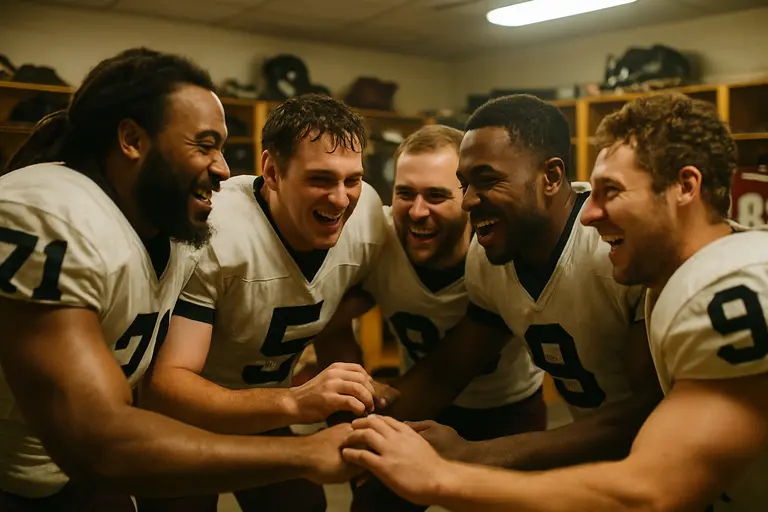
Team chemistry can sound soft until it is missing. The 2024 season showed how quickly a team can lose its footing when execution, belief and closing ability do not line up. Norvell’s response after that season placed team dynamics beside scheme, not behind it. That is a key distinction. A rebuilt line can help the run game, but the line also has to trust the backs, quarterbacks and coaches. A new coordinator can bring structure, but the players still have to accept new voices and new demands.
This is where local memory matters. Florida State fans have seen talented teams that felt connected and talented teams that did not. The difference often appears in short-yardage snaps, road-game responses and how players react after one bad quarter. In 2025, the ACC-leading offensive metrics offered evidence that the Seminoles found more consistent answers, especially in the run game and on third down.
Staff Choices And Community Patience
Coaching change is never just an internal matter at Florida State. It reaches boosters, former players, high school coaches, parents and the families who plan fall weekends around kickoff windows. When Norvell changed offensive responsibilities and reshaped the roster after 2024, he was also asking the community to believe that the plan had learned from failure.
That is why patience in Tallahassee is rarely passive. Fans are not simply waiting; they are measuring. They want to see better line movement, fewer stalled drives, more late-game control and young players who look prepared rather than overwhelmed. Our earlier look at FSU coaching continuity fits this same theme: stability matters only if it produces clearer habits and better player growth.
- For players: development means a role that can grow with performance, not just seniority.
- For coaches: team dynamics require communication that survives pressure weeks.
- For fans: progress is easiest to trust when it appears in line play, third downs and leadership.
What Mike Norvell Development Means For Tallahassee
The strongest reading of Mike Norvell Development is that it has become both a football standard and a community conversation. The program’s recent arc has included a severe 2024 fall, a staff-and-roster response, and a 2025 offense that led the ACC in several major categories. That does not erase the pressure. At Florida State, pressure is part of the job. But it does give the fan base something specific to evaluate.
For Tallahassee, the most meaningful coaching stories are the ones that show up in people, not just play sheets. Petitbon’s transfer and leadership, Robinson’s first-team All-ACC recognition, Desir’s early defensive impact and the broader offensive gains from 2025 all point toward a program trying to make player growth visible. That is the work that keeps a locker room together after disappointment and gives a fan base reasons to believe the reset is more than cosmetic.
The next judgment will always come on the field, because that is the bargain at Florida State. Still, the better question is not whether Norvell talks about development. It is whether his players keep reflecting it in preparation, toughness, production and leadership. After the evidence from 2025, the conversation around Mike Norvell Development has moved from theory to a standard the Seminoles must keep meeting.