

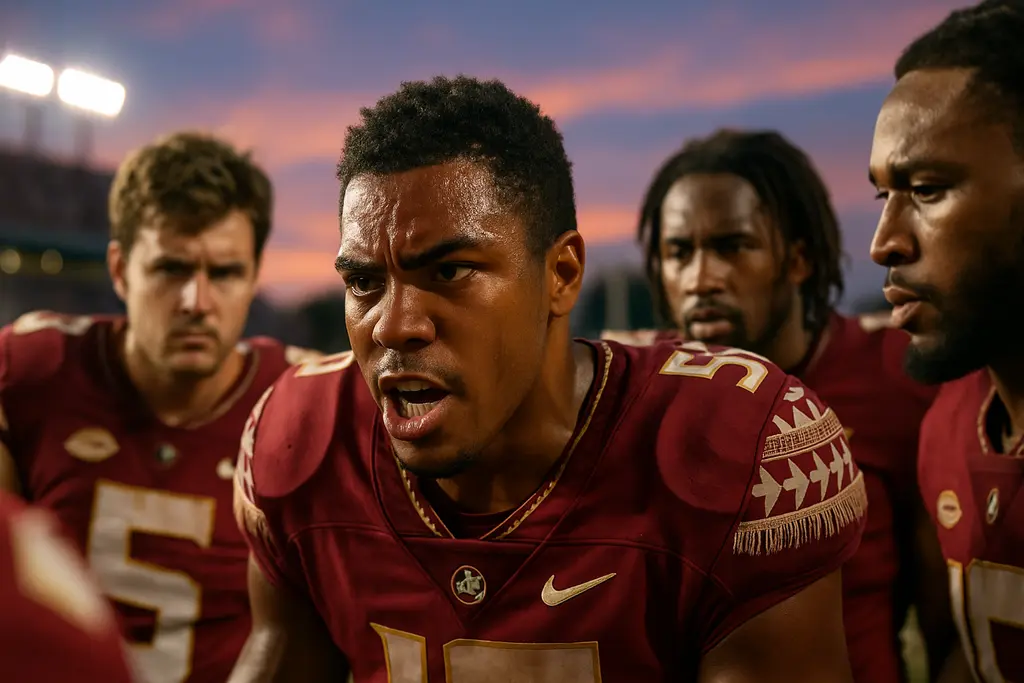
FSU athlete branding was not treated like a side hustle at Florida State’s Future of NIL Summit. It came across as part of the modern athlete’s education: how to speak, how to choose partners, how to protect eligibility, and how to carry a name beyond the last snap. On September 4, 2026, Florida State held the second annual Future of NIL Summit at the Herbert Wertheim College of Business, bringing together student-athletes, administrators, legal experts and branding professionals, according to the University announcement.
That setting mattered. A business school forum on NIL can sound removed from the football field, but for Florida State athletes it connects directly to the daily grind. A punter’s hang time, a guard’s film study, a sprinter’s training rhythm and a softball player’s community presence all feed the same question: what does an athlete’s public identity say when the game is over?
Daniel Hughes, Florida State’s Australian punter, gave the summit a clear player-level voice. His message was not about chasing attention first. It was about letting the sport remain the center, then building from that base with honesty. For a program like FSU, where fans track specialists almost as closely as quarterbacks when field position swings a game, that is a meaningful distinction.
Why FSU athlete branding Felt Grounded In Football
Daniel Hughes And FSU athlete branding
Hughes arrived in the NIL conversation with an unusual mix of visibility and restraint. FSU News identified him as an Australian punter and a Ray Guy Award semifinalist at New Mexico in the previous season. The same report noted that he has more than 80,000 combined followers across TikTok and Instagram, with millions of views on his content, while his F-1 visa prevents him from monetizing brand deals while still enrolled FSU News reported.
That detail gives his comments real weight. Hughes is not speaking from the outside. He has already seen what athlete visibility can become online, yet he also lives with legal limits that many domestic athletes do not face. His position as a specialist makes the story more interesting, too. Punters rarely become the face of a college football marketing plan, but they can become known through precision, personality and consistency. At Florida State, where special teams can shift crowd energy in one kick, a punter with a public voice is not a novelty. It is part of how modern rosters are understood by fans.
Hughes’ core advice at the summit was direct: “You have to be authentic and genuine … If you’re not yourself … People can see through it.” That line cuts through much of the empty talk around NIL. The strongest athlete brands are not costumes. They are extensions of what teammates, coaches and fans already recognize. If a player is funny, teachable, serious, faith-driven, family-centered or community-minded, that should show naturally. If a player tries to copy someone else’s voice, the audience usually senses the gap.
Why A Specialist’s Voice Carries Weight
For Tallahassee fans, Hughes’ case is useful because it widens the NIL conversation beyond the most obvious stars. Football teams are built through role players, rotational pieces and specialists who may never lead a national broadcast tease but still carry value inside a locker room. A punter who understands field position also understands patience. He might appear for only a handful of snaps, but those snaps are pressure-packed. That kind of role can shape content with a different texture than the usual highlight reel.
That is where FSU athlete branding starts to feel local rather than generic. Florida State supporters have long embraced players who bring a distinct identity to the program. Some become remembered for awards. Some for rivalry moments. Some for how they treated fans at community events. The NIL era gives those identities more public space, but it does not change the foundation: production, trust and connection still come first.
What The Summit Said About Athlete Education
Financial Literacy Is Part Of Player Development
Florida State NIL Coordinator Charlie Votey emphasized the need to educate student-athletes about financial literacy as NIL continues to grow beyond endorsements into revenue sharing, recruiting, transfer rules and legal uncertainty. That point deserves attention because player development now stretches past strength training and film review. A young athlete may need to understand taxes, contracts, disclosure rules, savings, brand fit and how one post can affect a future opportunity.
For coaches and staff, that means the support structure around athletes has changed. The same program that helps a freshman adjust to class schedules and travel weeks may also need to help that athlete recognize the difference between a good offer and a distracting one. That does not make sports less pure. It makes the education around sports more honest.
There is also a community angle that should not be ignored. Tallahassee businesses, alumni groups and fans often want relationships with athletes that feel real. A restaurant appearance, youth clinic, charity event or local campaign can work when it matches the athlete’s values and schedule. If it feels forced, it becomes forgettable. Hughes’ authenticity point fits that local economy as much as it fits social media.
International Athletes Face A Different NIL Reality
Hughes’ F-1 visa status adds another layer. His audience is large, and his content has reached millions of views, but he cannot monetize brand deals while still enrolled. That gap between visibility and income is one of the more revealing parts of the current NIL period. Not every athlete with an audience has the same ability to act on it.
For FSU, this matters because international athletes are part of the Seminoles’ competitive identity across sports. They bring different training backgrounds, family stories and cultural ties. Yet their NIL options can be more restricted than those of teammates. The summit’s inclusion of legal voices was not window dressing; it reflected a real concern for athletes who may need clear guidance before saying yes to anything tied to compensation.
That is why education has to come before promotion. The safest message for athletes is not “post more” or “take every chance.” It is to understand the rules, define the voice and protect the future. Florida State’s best NIL work will likely be measured not only by deals signed, but by mistakes avoided and confidence gained.
How NIL Connects To Florida State’s Local Sports Identity

Fans Know The Difference Between Brand And Gimmick
College fans are not passive consumers. Florida State fans, especially, have a long memory. They remember the player who stayed late to sign autographs, the backup who became a captain, the specialist who flipped a rivalry game, the transfer who embraced Tallahassee rather than using it as a stopover. That memory shapes how athlete branding is received.
That is why FSU athlete branding has to be rooted in place. Tallahassee is not Los Angeles or New York, and it should not try to be. The most effective athlete presence at FSU is likely to feel connected to campus, local families, game-day rhythms and the pride of wearing garnet and gold. A player’s online audience may stretch across continents, as Hughes’ does, but the first test of credibility often happens close to home.
There is a recruiting piece here as well, though it should be discussed carefully. NIL is now part of the athlete experience, and prospects notice whether a school is organized. A summit like this sends a message that Florida State is trying to educate rather than leave athletes to figure things out alone. For readers who follow how data, staff planning and campus systems shape wins, that same institutional mindset showed up in our look at how Seminoles win smarter.
- Athletic identity first: Hughes framed sport as the base, not the accessory to a public profile.
- Authenticity matters: His advice centered on being genuine because audiences can sense imitation.
- Education protects athletes: Financial literacy and legal guidance now sit beside training and academics.
- Local trust still counts: In Tallahassee, fans respond best when public identity matches the person they see around the program.
What FSU athlete branding Means After The Summit
A Practical Lesson For The Next Wave Of Seminoles
The lasting value of the September 4 summit is not that every athlete left with the same plan. They should not. A punter from Australia, a freshman basketball player, a veteran softball starter and a track athlete with Olympic dreams all need different approaches. The shared lesson is that a public identity should be built with care, not panic.
For Hughes, the story is especially strong because his current limits sharpen his perspective. He has audience reach but cannot monetize brand deals while enrolled because of his visa status. That could make some athletes frustrated enough to disengage. Instead, his comments suggest a longer view: build trust now, stay true to the athletic identity, and understand that value can extend beyond immediate income.
For Florida State, the summit showed that NIL is now part of the school’s sports culture, not a separate business seminar happening down the street from practice. The best version of FSU athlete branding will help athletes speak clearly, avoid poor fits and connect with a community that already cares deeply about their growth. In a college town, that connection is never just transactional. It is built in classrooms, weight rooms, stadium seats, local businesses and the small moments when a player’s public voice matches the person fans believe they are cheering for.