

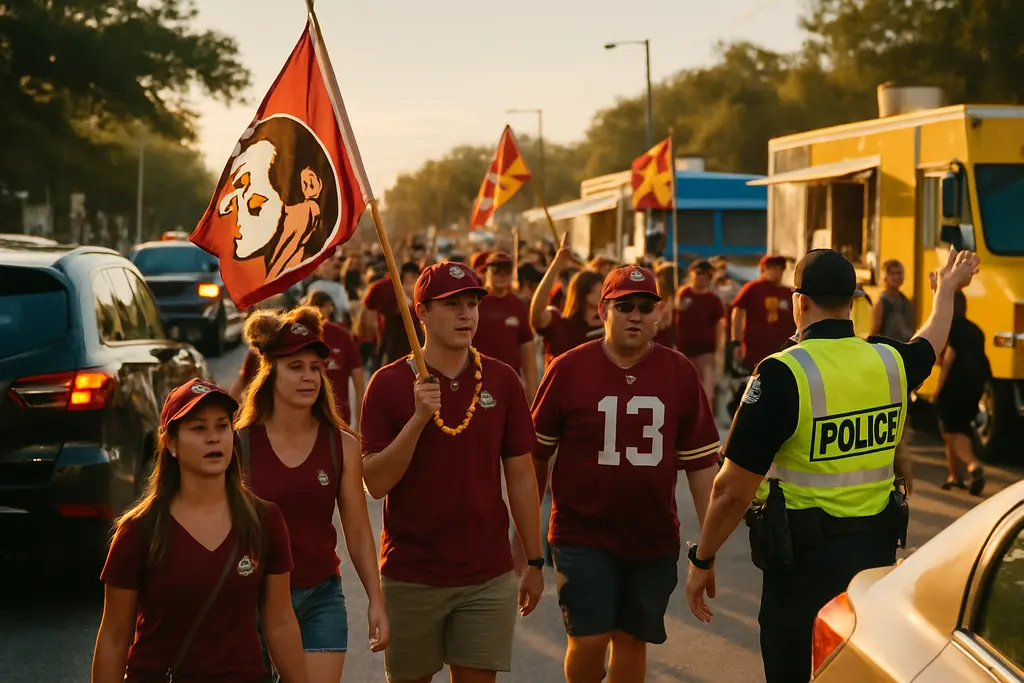
FSU Traffic Tips matter more than usual during the 2026 football season because Tallahassee is not just handling a football crowd; it is handling the habits, traditions and timing of two proud campus communities. As of September 22, 2026, Florida State has already shared one home-game Saturday with Florida A&M on August 29, and two more shared dates remain on Saturday, September 26, and Saturday, October 31.
That is where the local story starts. Traffic around Doak Campbell Stadium is never just about asphalt. It is about families trying to park together, students leaving apartments near campus, alumni returning to the same blocks they walked years ago, and neighborhood businesses seeing their busiest hours tied to kickoff windows. A good plan will not make Pensacola Street empty, but it can keep a long day from turning into a frustrating one.
FSU Traffic Tips For Shared Saturdays
FSU Traffic Tips For FSU-FAMU Dates
Florida State University said FSU and FAMU will host home games on the same three Saturdays in fall 2026: August 29, September 26 and October 31, with heavier traffic expected downtown and around both campuses, according to FSU game-day traffic guidance. The August 29 date has already passed, giving fans a real preview of how tight the city can feel when both fan bases are moving through town on the same day.
For September 26 and October 31, the key is to think beyond the stadium. A driver who is not going to Doak can still be caught in the traffic stream if the route cuts through the campus edge or downtown corridor. A family coming from the west side, a former student meeting friends near Gaines Street, or a local resident heading across town for errands may all meet the same chokepoints if timing is ignored.
Roads That Carry The Strain
The main roads listed in the university guidance are familiar to anyone who has spent a fall Saturday in Tallahassee: Tennessee Street, Pensacola Street, South Monroe Street, Gaines Street, Lake Bradford Road and Orange Avenue. Those roads connect more than parking lots. They connect neighborhoods, restaurants, hotels, student housing and the path between two campuses with their own rhythms.
That is why the best traffic advice is not simply “leave early,” even though leaving early helps. The better advice is to match your route to your purpose. If you are heading to the stadium, accept that the last few miles will slow down and build that time into the day. If you are not part of the football crowd, stay farther from the stadium spine rather than trying to cut through it. If you are meeting friends, pick a place that does not force everyone into the same block at once.
Pregame Movement Around Doak
Signals And Officer Control
Pregame traffic near Doak Campbell Stadium is not left to chance. Before FSU home games, signals on Pensacola Street between Duval Street and Chieftan Way are set to flash so westbound traffic toward the stadium gets priority. Tallahassee Police Department officers are expected to be on site about three hours before kickoff, and law enforcement control of intersections may begin as early as six hours before the game.
That detail should shape fan expectations. If you usually arrive close to kickoff, you are entering a system that has already been redirected for hours. By then, traffic is no longer moving like a normal weekday or even a normal Saturday. The city has shifted into event mode, and the closer you get to Doak, the less freedom you may have to change course on the fly.
Routes For Non-Game Traffic
One of the more useful points in the university’s guidance is aimed at people who are not going to the game. For north-south travel, Ocala Road and Monroe Street are advised alternatives for drivers trying to avoid the heaviest stadium traffic. That recommendation matters because football traffic is not only a fan issue; it is a city issue.
A parent heading to a youth event, a restaurant worker trying to reach a shift, or a resident crossing town can benefit from staying out of the football funnel. The smartest FSU Traffic Tips are the ones that respect both groups: the fans who want a full day around Doak and the locals who still need Tallahassee to function while the crowd builds.
- For stadium-bound fans: choose a route before leaving, then stick with it unless officers direct otherwise.
- For non-game drivers: avoid drifting toward Pensacola Street just because it looks shorter on a map.
- For groups: set one meeting point that does not require circling the stadium blocks.
- For families: allow extra time for walking from parking areas, especially in heat or rain.
Postgame Exits And Campus Parking
One-Way Patterns After The Whistle
Postgame travel is its own event. After FSU games, streets around the stadium, including Pensacola Street east of the stadium and St. Augustine Street/W. Madison Street between Varsity Drive and South Monroe Street, shift to one-way outbound eastbound traffic patterns. Northbound traffic is not permitted on Springhill Road/Lake Bradford Road from Levy Avenue to Gaines Street, and southbound traffic is blocked on Stadium Drive from Tennessee Street.
That means the way you entered may not be the way you leave. This is the part of game day where patience matters most. Everyone wants to get back to a hotel, a family gathering, a restaurant or home. But the outbound plan is designed to move large numbers of cars away from the stadium, not to preserve every driver’s preferred shortcut.
Accessible Parking And Lot Rules
Accessible parking also requires advance attention. FSU’s 2026 Disabled Parking Program is managed by Transportation and Parking Services and Seminole Boosters, with accessible parking offered by application on a first-come, first-served basis. The listed costs are $25 for single-game passes and $100 for season passes covering seven home games, while qualifying veterans may have fees waived through the program described by FSU Transportation and Parking Services.
Campus parking rules are just as important for students and weekday campus users. Multiple parking areas close on game days for reserved Seminole Booster parking, and vehicles, including motorcycles and scooters, must be removed from those Booster lots by 11:59 p.m. the night before game day. That deadline can feel harsh if you forget it, but it keeps lots clear for the event plan that thousands of people rely on.
The SeminoleSafe App also belongs in the practical fan toolkit. The university says it provides real-time game-day guidance, including turn-by-turn directions to assigned Booster or general parking lots, clear-bag policy updates, prohibited item information and live weather data. For a fan base that stretches from students walking over from apartments to alumni driving in from across Florida, having one official source on the phone can cut down on guesswork.
Why FSU Traffic Tips Matter To Tallahassee
The Local Rhythm Beyond The Stadium
Florida State football traffic is easy to frame as a parking headache, but that misses the larger point. Home games shape the local sports economy and the emotional calendar of the city. Restaurants staff up, hotels fill, families plan reunions, and alumni build weekends around the same few roads that can become slow by midafternoon. For more on how those Saturdays ripple through the city, our earlier look at how FSU home games fuel Tallahassee connects the stadium crowd to local business life.
That community effect is why FSU Traffic Tips should be treated as part of the game-day ritual, not as a dry city notice. The Marching Chiefs, the tailgates, the family photos near Doak, the postgame meals and the long walks back to the car all depend on people moving safely through the same shared space. Good planning protects the parts of the day fans actually remember.
For September 26 and October 31, the advice is simple but specific: know whether FAMU is also at home, check the official parking and traffic information before leaving, avoid the affected corridors if you are not going to the game, and expect postgame one-way patterns to change your exit. Those FSU Traffic Tips will not remove every delay, but they can help Tallahassee handle football Saturdays with more patience and fewer surprises.